
Pressure with a direction
Firmest at the ankle, easing as it climbs the leg. Not a leg in a tight tube.

Presteer beter. Herstel sneller. Voor elke sport.
Onze kniehoge compressiesokken bieden professionele degressieve compressie die de bloedcirculatie in je benen stimuleert — minder vermoeidheid tijdens je training, sneller herstel erna. Geschikt voor hardlopen, fietsen, voetbal, tennis, wandelen en meer.
S (35-38) — Schoenmaaat 35 t/m 38
M (39-42) — Schoenmaaat 39 t/m 42
L (43-46) — Schoenmaaat 43 t/m 46
Measured at three points up the leg. A sock that squeezes the same all the way is not doing this.
Hover a line to find it on the sock.
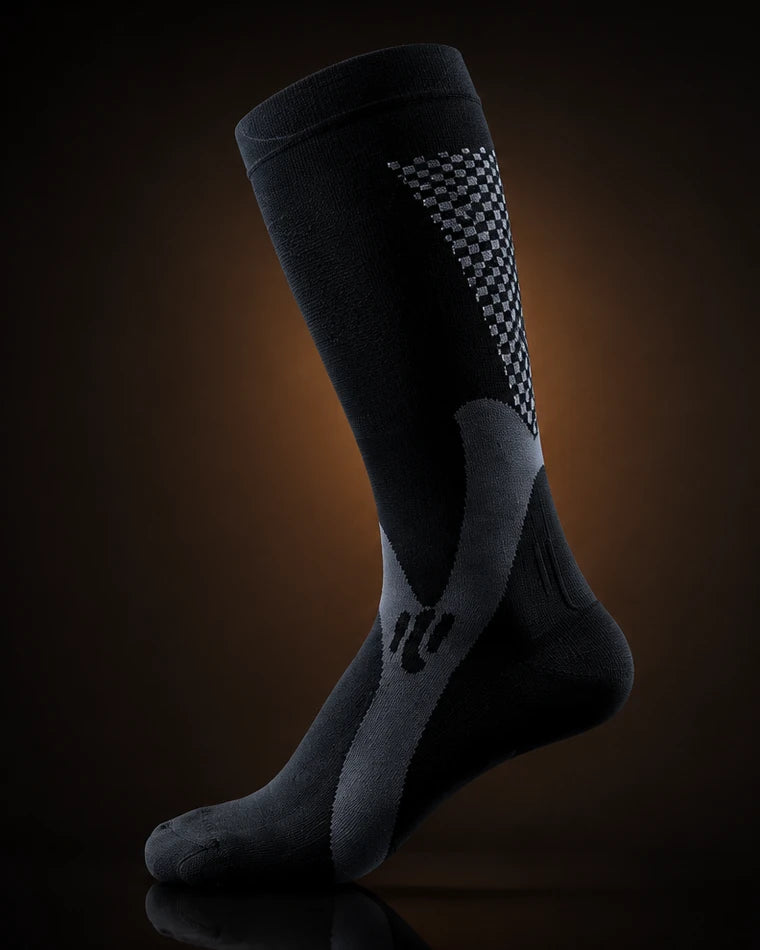
One piece with the leg. No silicone, no ring.
Colour knitted in, never printed. Nothing wears off.
Knitted tighter here than anywhere else on the sock.
Wraps the joint instead of crossing it.
Knitted into a cup, so it stays on your heel.
Closed flat. No ridge across your toes.
Mirrored, so each sock fits its own foot.
Most of the category is a tight tube with a number on the packet. Here is the difference, line by line.
Compression does not announce itself. For the first few hours you would not know you had it on — which is the point. It earns its price in the second half of a long day.
Nothing to report. Any decent sock is fine this far in.
Where you would normally start shifting your weight from foot to foot.
Legs that feel less used up than they usually do by now.
Four things you can feel. Not four things we hope you assume.
Firmest at the ankle, easing as it climbs the leg. Not a leg in a tight tube.
Less of that heavy feeling at the end of a long day standing or sitting.
Firm and even around the calf and ankle, from the first hour to the last.
Standing work, long journeys, and days that turn out to be both.

"After a full shift my legs used to feel heavy on the drive home. With these, I barely notice it anymore."

"Didn't expect much difference, honestly. Then I forgot to wear them for one shift and immediately noticed."

"I’m on my feet for 10+ hours most days. My legs feel noticeably less tired at the end of a shift."

"Wore them on a nine-hour flight and for once my ankles didn't feel swollen when we landed."

"They’re firm when you first put them on, but once they’re on I forget I’m even wearing compression socks."

"I bought one pair for work. Two weeks later I ordered three more because I kept reaching for them every morning."

"The biggest difference is after work. I used to take my shoes off and immediately put my feet up. Not anymore."
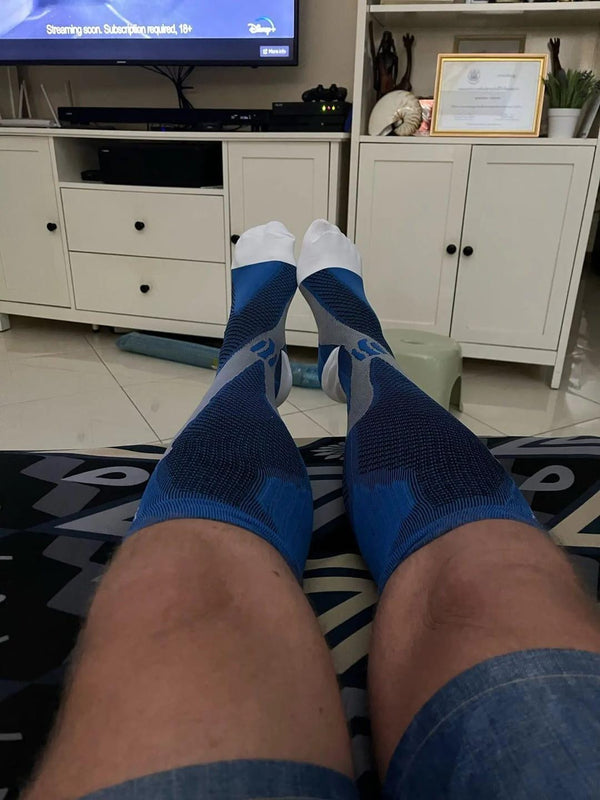
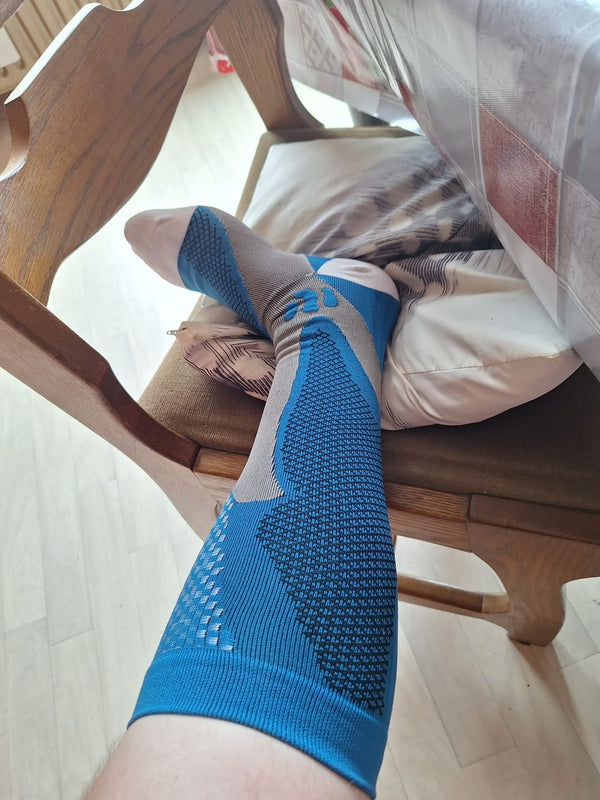
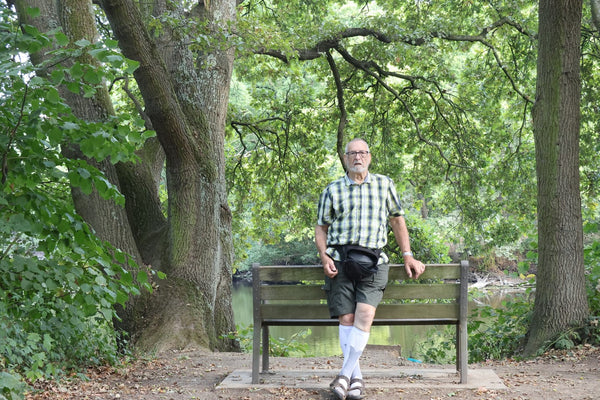
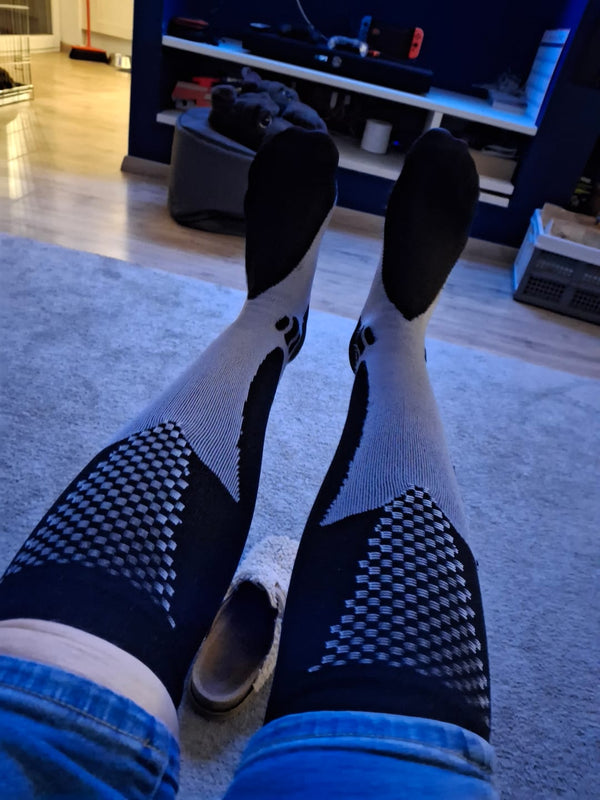
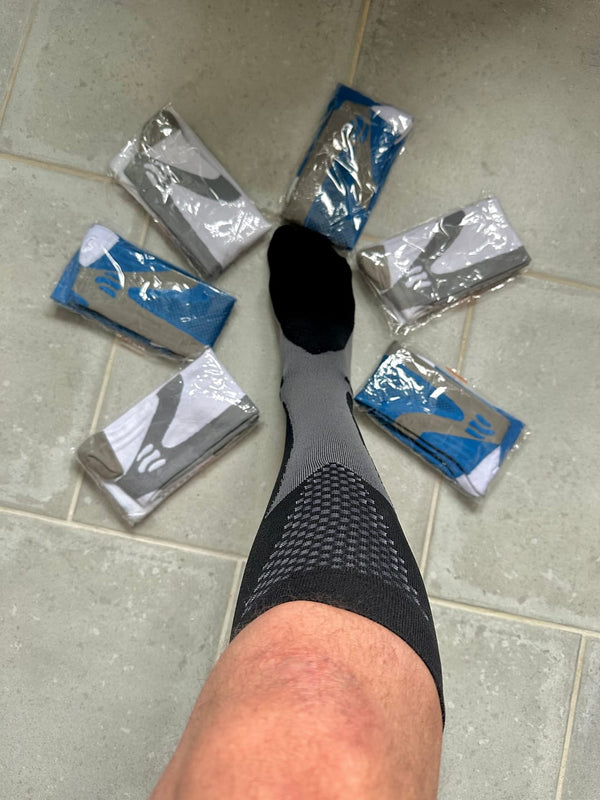
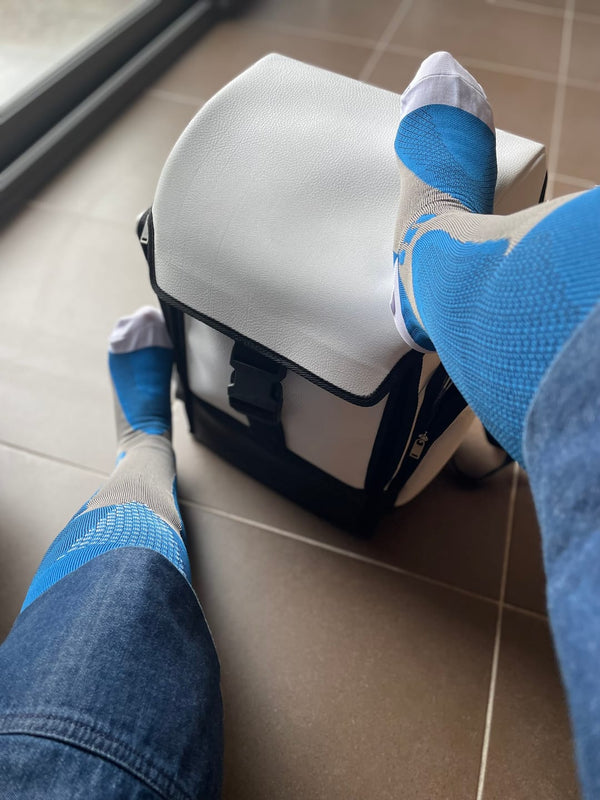
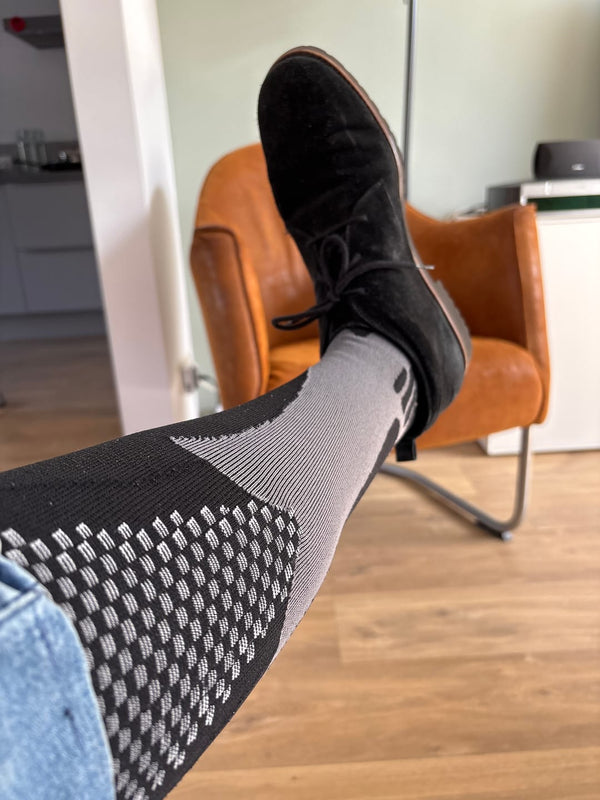
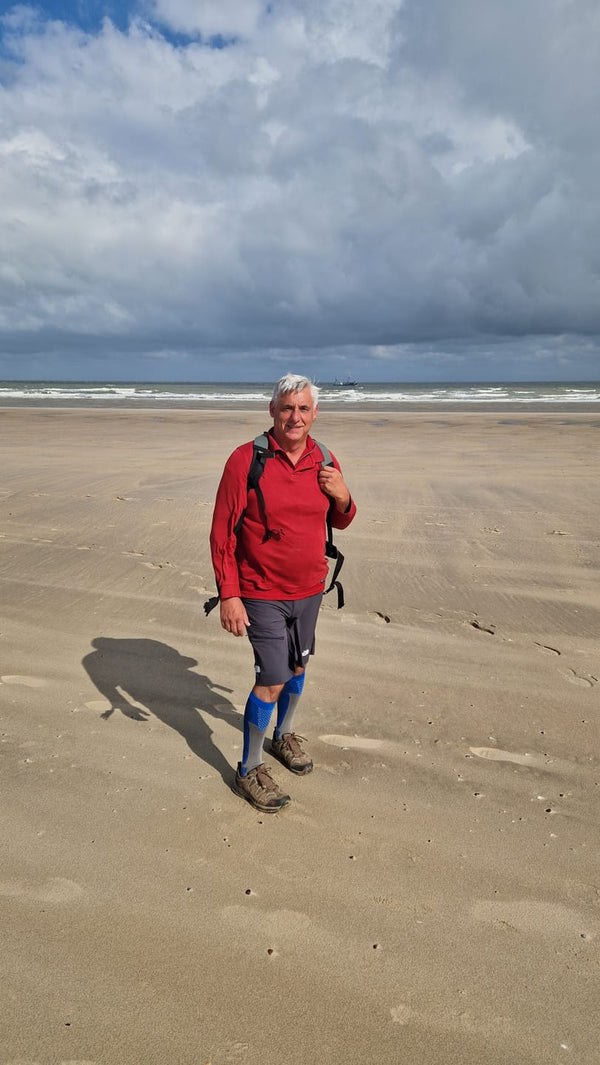
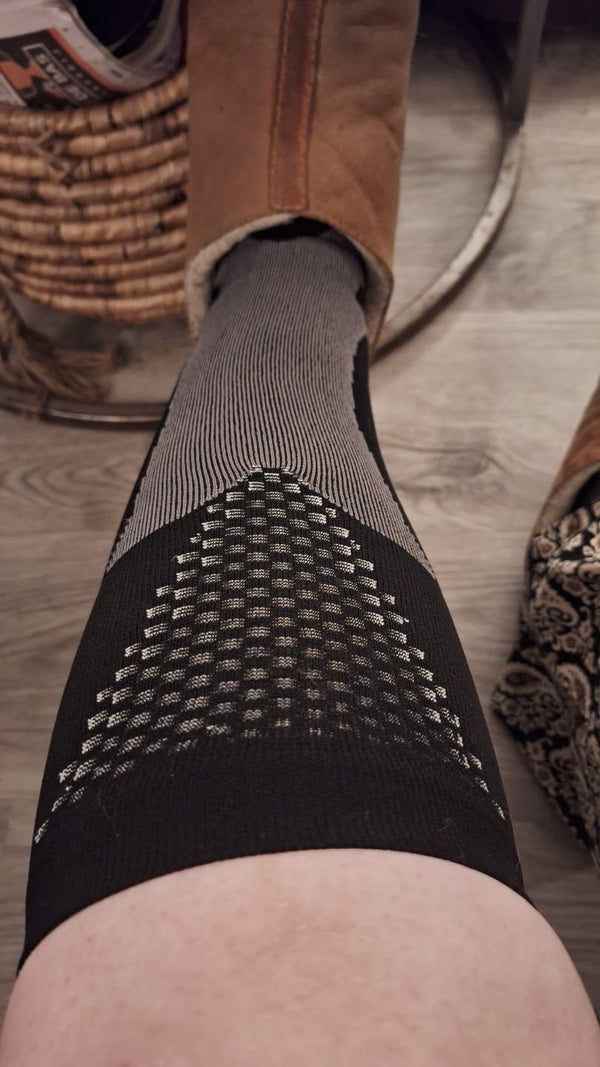
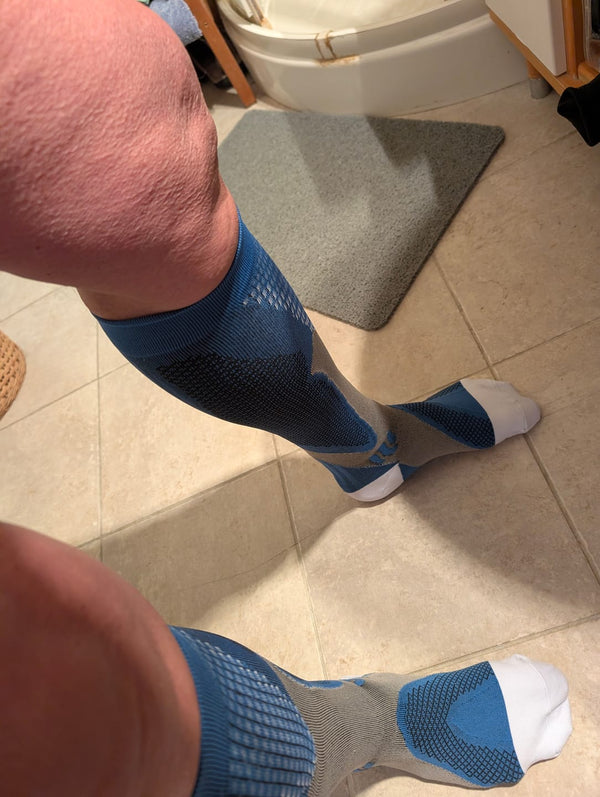
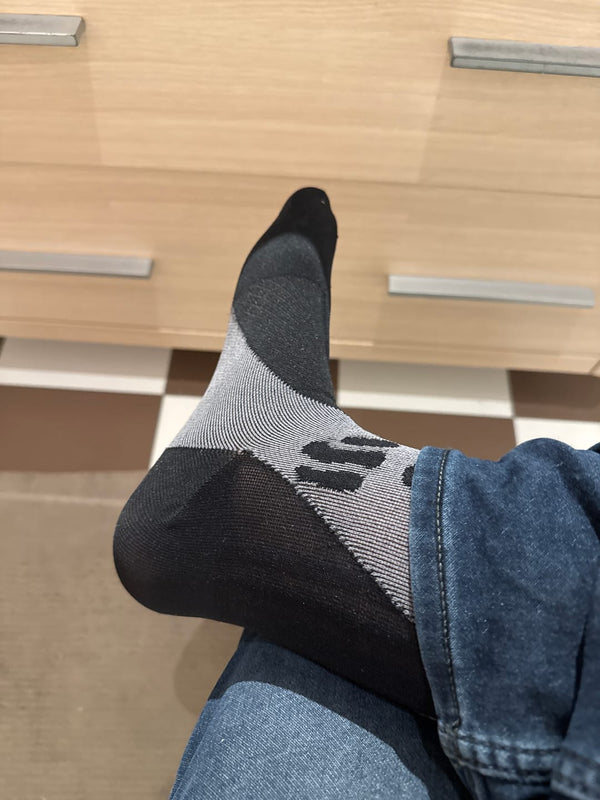
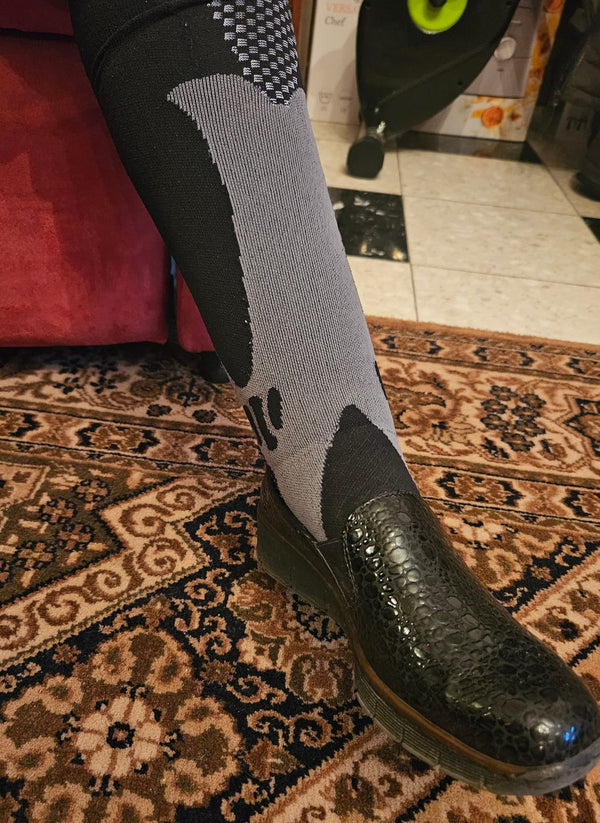
It is firm. You will notice it, and that is the product working. Made for long days standing, long journeys, and legs that feel heavy by evening. If you have never worn compression, expect about a week to get used to putting them on.
Yes, if you have a diagnosed venous or arterial condition, diabetes with reduced feeling in the feet, heart failure, or a skin infection on the leg. With a diagnosed venous condition a prescribed stocking is the right product
30 days return, unworn and in its packaging.
30°, inside out, no fabric softener — softener coats the elastane and stops it pulling back. Dry flat, never in a tumble dryer. Done that way they keep their grip.
To get the most out of your compression socks, it’s important to put them on correctly.
A class number would be wrong in at least one market. 20–30 mmHg is the American scale; the German RAL standard splits that same range across class 1 and class 2. So ours spans both and belongs to neither. The number means the same thing everywhere; the class does not.
